If someone out there is looking for something to get me for my birthday (nov. 25th ;) you might consider this- a very cool cookbook that catches us up on the latest techniques and still considers the classic approaches to food.
It is the brainchild of the first chief tech officer of google (a smart and well to do guy). So budget wasn't really an issue . . . they bought two of every machine they used, one for cooking and one for cutting in half. It uses special ink on special paper and the extra recipe book is printed on waterproof/cleanable paper. It'll run you about 480 clams. . . you could get it here.
These videos are definitely worth watching.

Thursday, July 28, 2011
Monday, July 25, 2011
My cucumber plant is putting out more than I consume. Please help!!

Similar to radishes, cucumbers suffer a fate limited by connotation. That connotation is that cucumbers are only good cold, but I happen to love cucumbers simply sauteed. However, because it's such a unique vegetable (or fruit, depending on your profession) you need to keep a few simple, but key, tricks in mind.
- The pan needs to be screaming hot. If it's not, the cucumbers will just wilt and release a bunch of water. Even at such a high heat, minimal browning will occur.
- You cant add any salt until the end, as it will cause your cukes to release too much water before they're ready.
It's also important to have everything ready for this recipe because once you start it happens quickly.
Simply Sauteed Cucumbers
 |
| I like oblong shapes for this recipe because it yields variance in texture. |
6-8 Cucumber with little to no seeds (if you're using bigger cukes, remove the seeds), cut into 1/2" coins or oblong shapes.
2 Garlic cloves, thinly sliced
Juice and zest of one lemon
optional: a healthy pinch of chili flakes

1. Place your heaviest skillet, ideally cast iron or black steel, on high heat for at least 5 minutes. It should turn a light color from the extreme heat.
2. Toss your cucumber pieces in a little vegetable oil and throw directly into the pan. Begin to stir or toss immediately. DO NOT PUT SALT at this stage.
3. Once the edges have begun to visibly soften, about a minute or so, add the garlic and lemon zest, continuing to stir quickly.
4. After 30-45 seconds more, add a good pinch of salt (I like coarse salt for this), the lemon juice and the chili flakes if you're using them.
Enjoy immediately! These were gobbled up before I could even try one.


Tuesday, July 19, 2011
I get a head of lettuce every week from my CSA, but they always go bad before I get to them. What can I do to stretch them a little further?


It's salad season and, especially for those of you in a CSA, giving your lettuces enough love is easier said than done, but with a little TLC you can carry your greens a little further.
The trick is to keep your lettuces cool and hydrated but dry - when you get them home it is usually fine to store them as is, in a plastic bag, in the "crisper" drawer of your fridge.* I like a plain grocery bag for this, the drawer is key because it protects the lettuce from air circulation in the fridge, which would otherwise suck the moisture right out.
After two to three days in this state, you'll start to see a little wilting. Leaves will droop and look generally tired and sad. This means it's time to breath a little more life back into the plant.
 |
| A salad spinner is one of my most useful uni-taskers. |
Once this is done, lift the lettuce out with your hands or a spider or large slotted spoon and drop them into a salad spinner basket or colander. No pouring! That just deposits the dirt right back onto the lettuce.
Dry the lettuce well, via salad spinning, or laying out on paper towels or tea towels and patting very well. Store it in a zip bag with another towel, to regulate moisture, and go back to the crisper. You'll see several more days of shelf life in your lettuce.

*The exception to this is when they're soaking wet when you buy them, sometimes stores or farmers spray their lettuces with water to keep them looking lively, but too much water equals rot.
Labels:
ingredients,
techniques
Wednesday, July 13, 2011
Squash Blossom Sauce
By Lauren Rauh
July signifies an abundance of new crops, including summer squash and their often overlooked blossoms. If you are feeling a bit adventurous (and willing to splurge), pick up a bunch of squash blossoms; these edible flowers are surprising versatile and offer a delicate summer squash flavor. You can slice up the blossoms and bake them in a frittata, toss them in a salad, melt into a quesadilla, stuff with cheese, or batter them and fry 'em up like the Italians do. Your local farmers may have some additional tasty ideas.
 By the time I got around to the farmer's market yesterday the blossoms had wilted significantly in the muggy heat. When they wilt the petals stick together and it makes it difficult to pull the blossoms apart without tearing them. So stuffing the blossoms was out for me--if you wish to stuff the flowers, you must buy super fresh and open blossoms. I considered my other options on my commute home and dreamed up this creamy sauce.
The amount of cream used can be cut down and replaced with milk or chicken or vegetable stock. On the other hand, if you want an even richer sauce, use butter instead of olive oil and add a little more butter while the sauce simmers for a lustrous finish.
Prepare the Squash Blossoms:
To removed the petals, grab the flower right above the stem and gentle lift away from the base of the blossom. The stem and all stamen should pull away. (Alternately, if you were to stuff and fry the blossoms, you would remove the insides and leave the blossom and stem in tact.)
 Pull the petals apart at one point, wash them in a bowl of water and lay flat to dry. Watch out for bugs, these little guys like to hang out inside the flowers:


To julienne the squash blossoms, roll the flattened petals and slice evenly and thinly from right to left.

 For the Sauce:
18-20 squash blossom, petals removed, washed and julienned (directions above)
One medium onion, diced
3-4 garlic cloves, minced
1 teaspoon chili flakes
6 saffron threads
1/3 cup cream
salt and pepper to taste
 Over medium heat, heat a heavy skillet or dutch oven. Add the oil. When the oil is hot add the onions. Sweat the onions for about 10 minutes, stirring often, until they are translucent and soft. Add the garlic and continue to sweat until the garlic is fragrant.


Stir in the chili flakes, saffron, and squash blossoms. Cook for a minute or two. Add the cream and salt and pepper to taste. Bring the mixture to a boil, reduce the heat and simmer the sauce for about 10 minutes, adding more liquid if it gets to dry to quickly. Taste and add more seasoning, if necessary.
Transfer the sauce to a blender. Puree the contents on low for about five minutes.
 Toss the sauce with hot fetuccine, pappardel, or gnocchi; serve with fish or grilled vegetables; use it as a dip for a crusty bread. The possibilities are endless, but undoubtedly delicious!
Makes about 1 cup of sauce.
July signifies an abundance of new crops, including summer squash and their often overlooked blossoms. If you are feeling a bit adventurous (and willing to splurge), pick up a bunch of squash blossoms; these edible flowers are surprising versatile and offer a delicate summer squash flavor. You can slice up the blossoms and bake them in a frittata, toss them in a salad, melt into a quesadilla, stuff with cheese, or batter them and fry 'em up like the Italians do. Your local farmers may have some additional tasty ideas.
 By the time I got around to the farmer's market yesterday the blossoms had wilted significantly in the muggy heat. When they wilt the petals stick together and it makes it difficult to pull the blossoms apart without tearing them. So stuffing the blossoms was out for me--if you wish to stuff the flowers, you must buy super fresh and open blossoms. I considered my other options on my commute home and dreamed up this creamy sauce.
The amount of cream used can be cut down and replaced with milk or chicken or vegetable stock. On the other hand, if you want an even richer sauce, use butter instead of olive oil and add a little more butter while the sauce simmers for a lustrous finish.
Prepare the Squash Blossoms:
To removed the petals, grab the flower right above the stem and gentle lift away from the base of the blossom. The stem and all stamen should pull away. (Alternately, if you were to stuff and fry the blossoms, you would remove the insides and leave the blossom and stem in tact.)
 Pull the petals apart at one point, wash them in a bowl of water and lay flat to dry. Watch out for bugs, these little guys like to hang out inside the flowers:

To julienne the squash blossoms, roll the flattened petals and slice evenly and thinly from right to left.

 For the Sauce:
18-20 squash blossom, petals removed, washed and julienned (directions above)
One medium onion, diced
3-4 garlic cloves, minced
1 teaspoon chili flakes
6 saffron threads
1/3 cup cream
salt and pepper to taste
 Over medium heat, heat a heavy skillet or dutch oven. Add the oil. When the oil is hot add the onions. Sweat the onions for about 10 minutes, stirring often, until they are translucent and soft. Add the garlic and continue to sweat until the garlic is fragrant.
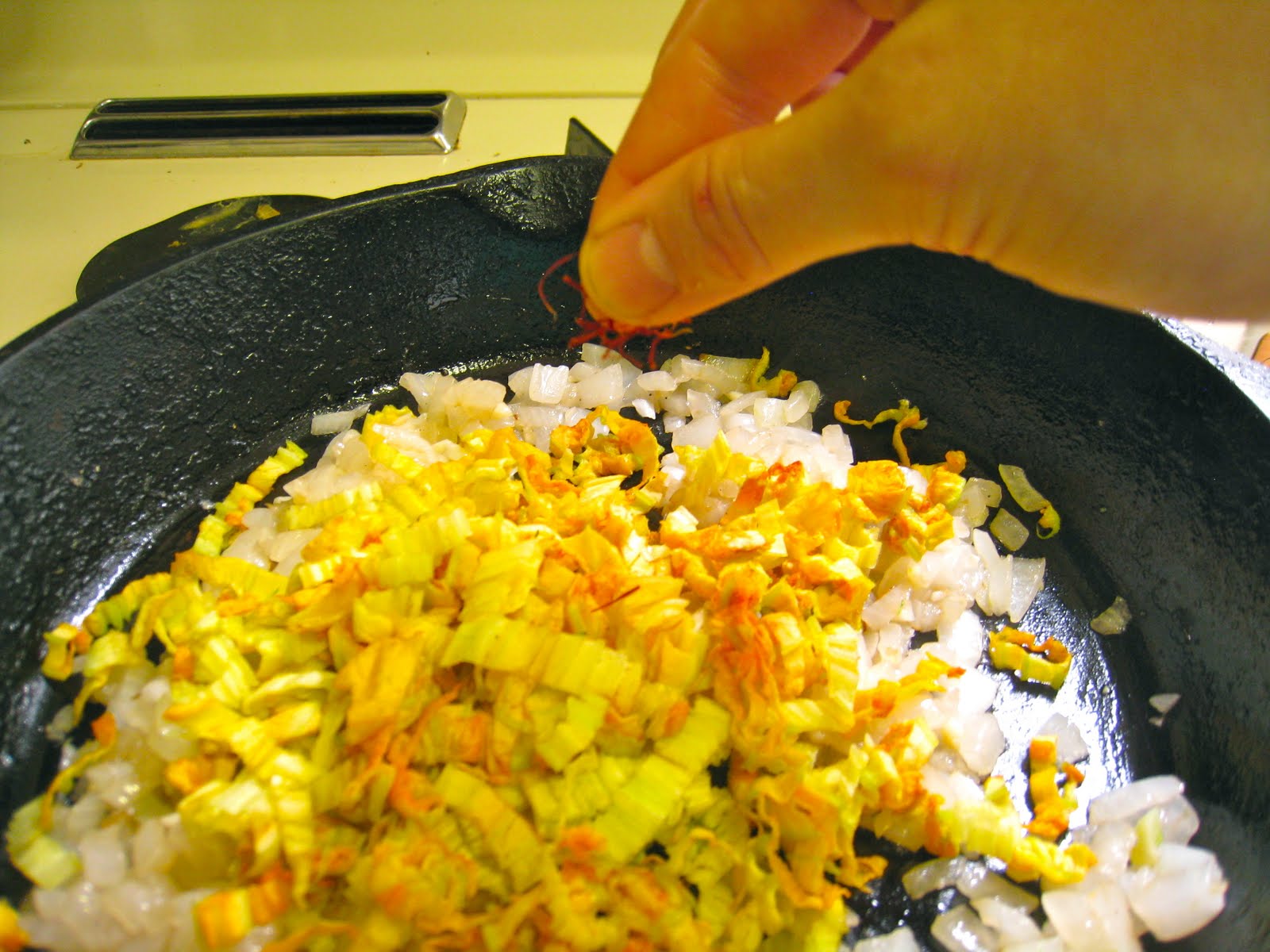
Stir in the chili flakes, saffron, and squash blossoms. Cook for a minute or two. Add the cream and salt and pepper to taste. Bring the mixture to a boil, reduce the heat and simmer the sauce for about 10 minutes, adding more liquid if it gets to dry to quickly. Taste and add more seasoning, if necessary.
Transfer the sauce to a blender. Puree the contents on low for about five minutes.
 Toss the sauce with hot fetuccine, pappardel, or gnocchi; serve with fish or grilled vegetables; use it as a dip for a crusty bread. The possibilities are endless, but undoubtedly delicious!
Makes about 1 cup of sauce.
Labels:
ingredients,
lauren rauh,
Recipe
Subscribe to:
Posts (Atom)

